Blog · 19 November 2026
You have the brand idea; here is how to turn it into a first, affordable production run — and grow without changing maker.
What private label means
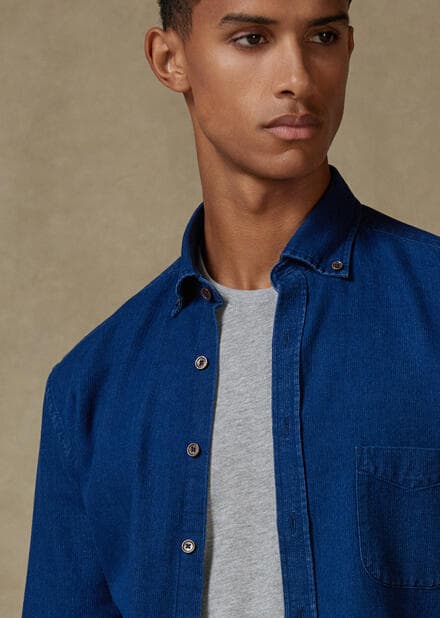
Private label (also called white label) means a manufacturer makes shirts that are sold under your brand. You decide the style, fabric, colours and sizes; the manufacturer handles pattern, cutting, sewing and finishing, and delivers finished, labelled goods.
Compared with building your own production, it lets you launch with a fraction of the investment — and focus on design, marketing and sales.
Step 1: Define a small, focused range
Most successful shirt brands start narrow: one signature shirt done very well, in two or three colours. A white and a light-blue business shirt, an Oxford button-down, or a linen summer shirt are typical first styles because the demand is proven.
Step 2: Choose fabric for your price point
Fabric drives both the feel and the cost of a shirt. Cotton poplin and Oxford are the classics; twill drapes well and resists creasing; linen sells in summer. Easy-care finishes and poly-cotton blends lower ironing and can lower cost.
- Premium: fine cotton poplin, twill, Oxford
- Everyday: cotton with easy-care finish
- Value or workwear: poly-cotton blends
Step 3: Send a brief, tech pack or sample
You do not need a full tech pack to start. A reference shirt you like, a photo with notes on collar, cuffs and fit, and your size range are enough for a manufacturer to make a first sample and price it. Over time, build a tech pack so every reorder is identical.
Step 4: Approve the sample and the quote
Check the sample for fit, measurements, collar shape and finishing. Ask for corrections until it is right — it is far cheaper to fix a sample than a production run. The quote should state fabric, quantity per colour and size, labels, packaging, payment terms and delivery date.
Step 5: Labels and packaging
Your brand label, size label and care label are what make the shirt yours. Agree their design, material and position with the manufacturer, along with folding and packaging — individual polybags, boxes or hangers depending on how you sell.
Step 6: Production, approval and delivery
Once the deposit is paid, the fabric is ordered or allocated and production starts. Finished goods are inspected and approved before the balance is paid and the order ships to you.
Growing without changing manufacturer
Many young brands outgrow their first workshop. Choosing a manufacturer that can make small runs and also handle large volumes means you can scale your best-sellers without re-sampling and re-approving everything with a new supplier.
Frequently asked questions
How many shirts do I need for a first private label order?
It depends on the manufacturer's minimum. We work from one bolt of fabric — 100 metres per colour and style — which is a manageable first run for a new brand.
Do I need my own designer?
Not necessarily. You can start from an existing style and adjust collar, fit and details with the manufacturer.
Can I use my own labels?
Yes. Brand, size and care labels and packaging are agreed with the manufacturer in the quote.